
The Enterprise Resource Planning (ERP) System Modernization Project is a strategic initiative to modernize student, financial, and human capital management functions, improving operational efficiency, user experience, and performance outcomes.
George Mason has relied on Ellucian Banner for several decades, but the current single‑platform implementation is increasingly complex, poses control challenges, and introduces risks that cannot be fully addressed due to system limitations.
To remedy this, we are evaluating modern, cloud‑based ERP solutions or a combination of best‑fit platforms to strengthen controls, improve data integrity, resolve audit risks, and better align systems with our evolving needs.
Goals & Framework
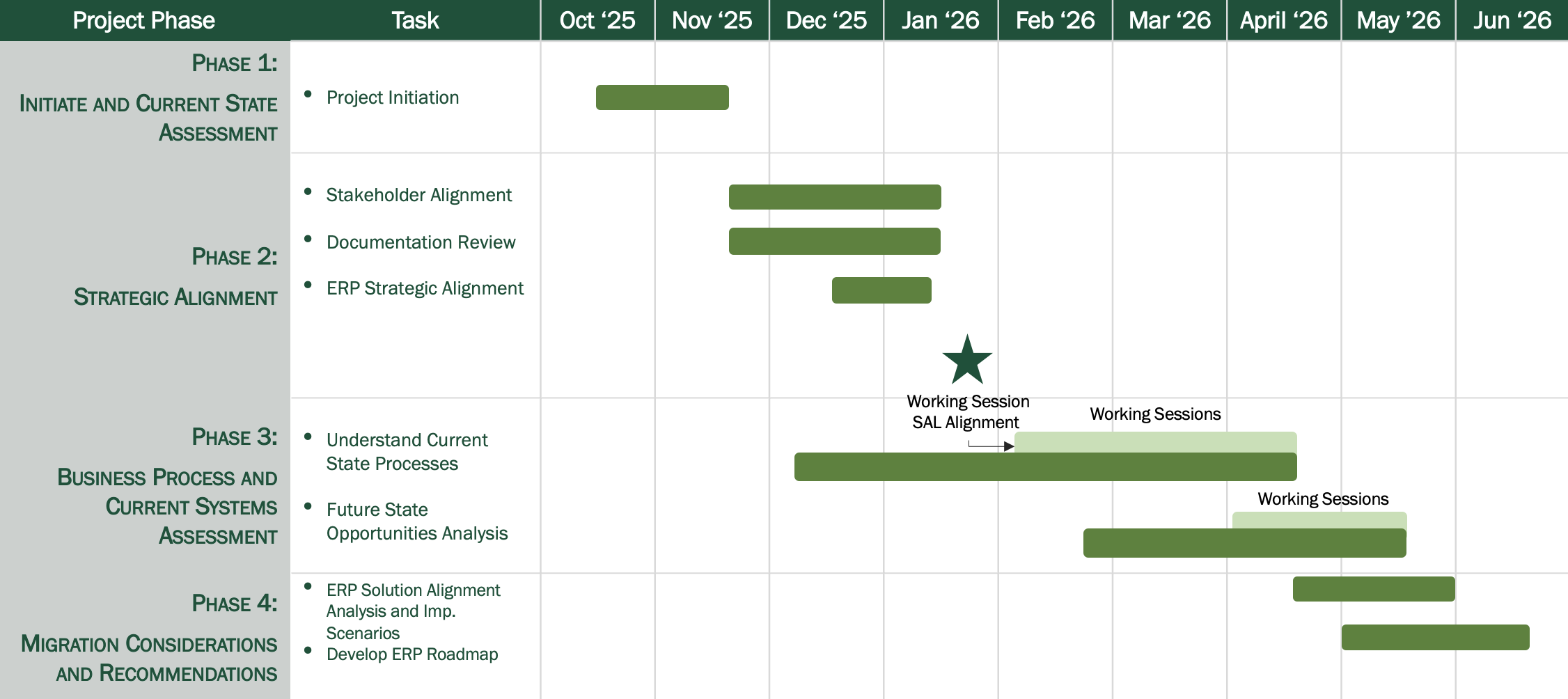
The modernization effort will begin with an assessment of George Mason’s business and technical requirements for a cloud‑based ERP solution. By summer 2026, this assessment will enable university leadership to make informed, strategic decisions.
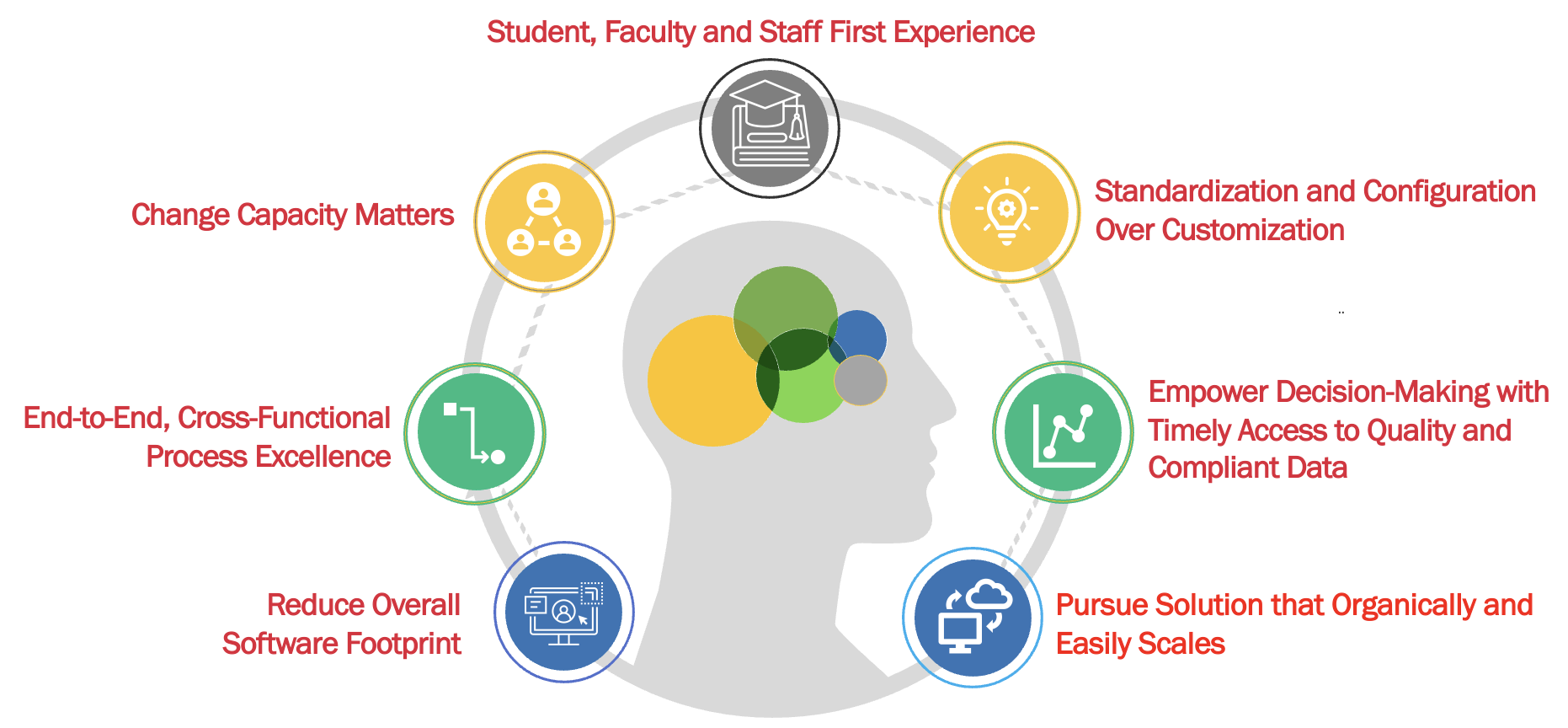
In-Scope:
- Assess enterprise‑level processes across HCM, Finance, and Student
- Determine high‑level business capabilities George Mason needs to support these processes
- Identify major pain points and strategic priorities that inform solution direction
Out-of-Scope:
- Exception handling or role‑specific process variations
- Detailed technical requirements, configurations, or integrations
- Comprehensive documentation of every sub‑process or workaround
Timeline
Any extra info here?
FAQs
What led to this effort?
This initiative supports President Washington’s priorities to modernize internal business functions and adopt modern technologies. It is guided by a 2023 ERP Modernization Feasibility Study that recommended a best‑fit, cloud‑based ERP approach with reduced customization across core administrative functions.
How does this assessment help with resource planning?
The resulting roadmap will allow George Mason to prioritize resources alongside other strategic initiatives and move away from the costly “reactive” cycle required to maintain the current state.